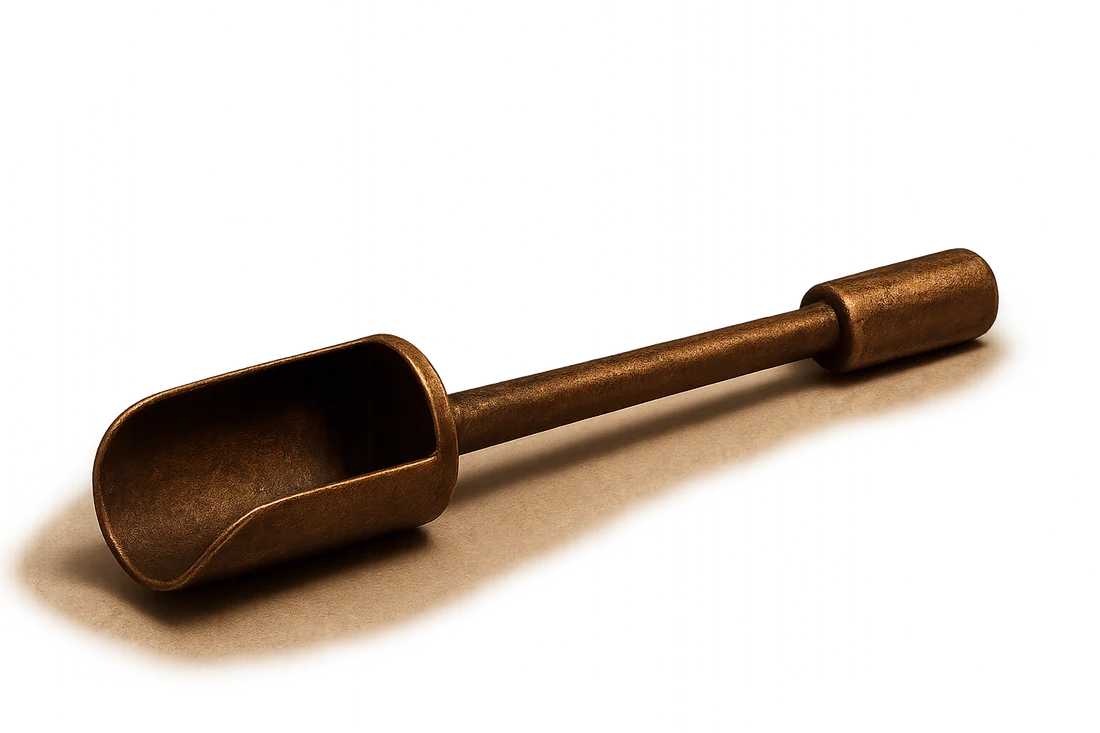
From the roast log
First Crack, Explained
Around the nine-minute mark the drum starts to talk — a dry snap, like far-off popcorn or knuckles in the next room. That is first crack, and everything in this shop is tuned to it.
Here is what is actually happening: the bean has been drying and browning and building steam behind its walls, and at first crack the walls give. The bean splits a seam, doubles its size, and lets the steam out. Sugar has caramelized. Acids have started breaking down. The seed has become coffee.
Everything he sells lives in the short country after that sound. Pull right at the crack and you keep the bright, grassy edges — good for the Guji. Ride a minute or two past it and sweetness rounds up and body comes in — that is Huila territory. Go much further and you are not tasting a farm anymore, you are tasting the roaster showing off. He does not go much further.
He roasts by the numbers on his log, but he confirms by ear, leaned in, hand on the drum. The machine has a thermometer. He has twenty years. They are usually in agreement, and when they are not, the ear wins.
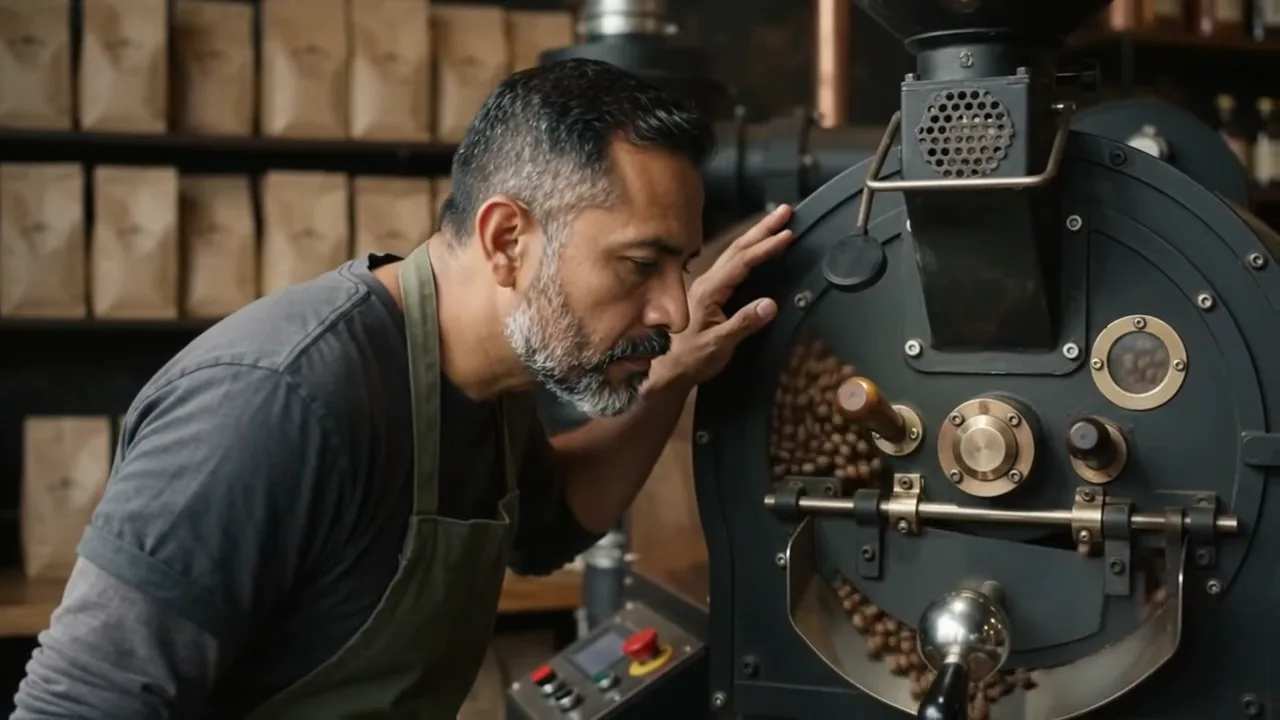
First Crack
He hears it
before he sees it.